Vancouver has a complicated relationship with the sun. We get rain that softens the edges of summer and feeds the cedars, plus enough bright days to make rooftop solar a practical, long‑lived investment. The trick is understanding how solar behaves in a coastal climate, what a well‑built system looks like, and when to bring in a professional who knows local codes, roofs, and electrical infrastructure. After a decade of working with homes and small businesses here, I can tell you the story is less about panels themselves and more about design, wiring, and maintenance that respect our weather and building stock.
The Vancouver case for solar
People ask about output first. On average, Metro Vancouver sees roughly 1,000 to 1,200 kWh of solar irradiance per square meter each year. That works out to about 900 to 1,100 kWh of annual energy per installed kilowatt of panels, assuming decent orientation and shading. A 7 kW array on a typical detached home can produce something in the 6,000 to 8,000 kWh range annually. If your household uses 10,000 kWh a year, that covers well over half, sometimes more if you pair it with efficiency upgrades and a smart thermostat to curb waste.
Net metering with BC Hydro makes the math friendlier. You feed excess power back to the grid and bank credits. Spring and summer production offsets the shoulder season, and winter is a different story entirely. Expect December to produce maybe a tenth of July, sometimes less if fog and low clouds hang around. That seasonal swing matters for cash flow, but the long days plaster the ledger with credits, and the grid acts as your virtual battery. Batteries can still make sense for resilience, which I will get to, but most Vancouver installs start grid‑tied.
Payback time depends on roof simplicity, inverter choice, wiring runs, and whether you combine projects. I have seen tidy pitched‑roof systems pencil out in 9 to 12 years, faster if you were already planning a service upgrade or roof replacement. Commercial flat roofs with good access can run leaner and hit 7 to 10 years because economies of scale kick in.
What panels actually endure here
Panels handle Vancouver’s climate well, provided the racking and flashing is done right. Coastal air carries salt, and that is where material choice matters. Aluminum rails with anodized coatings, stainless fasteners, and sealed penetrations with butyl or high‑quality gaskets pay for themselves by not corroding or leaking. Panels tolerate rain like ducks; it is the rooftop hardware that needs respect.

Wind uplift along English Bay or on the North Shore demands a proper engineering check. I have seen racking that met a generic spec but flexed in a winter squall. In one case, a small commercial array near the waterfront started to shift. The fix was simple but non‑negotiable: add ballast, tighten the layout, and use rail splices rated for higher loads. A Residential Electrician who only works interiors will miss that nuance. On roofs, you want someone who has learned the wind lessons the expensive way already.
Snow load is usually less of a problem than in the Interior, yet a cold snap with wet snow can weigh enough to test cheap standoffs. Set standoff spacing per engineering, not habit. The difference between two fasteners per rafter bay and three can be the difference between a quiet winter and a drywall stain.
Roofs, orientation, and creative layouts
South‑facing is great, but east‑west is not a dealbreaker. An east‑west split often smooths production across the day, which fits a home office or a café that ramps up morning to early afternoon. Shade from cedars and maples is the real thief. Trimming is an option if trees are on your property, and if not, use module‑level power electronics to claw back energy from partial shade.
Older Vancouver Specials and post‑war bungalows often come with 100 A service and a panel full of tandem breakers. For Solar Panel Installation, you need line of sight to your main service and room for a breaker or a supply‑side connection. This is where a team like TDR Electric earns its keep, balancing aesthetics and code. Sometimes the cleanest answer is a service upgrade to 200 A, especially if you plan EV Charger Installations or a future heat pump. The incremental cost of upgrading once, then designing around it, beats piecemeal fixes.
Flat roofs add another layer. Ballasted racking can avoid penetrations, but you must confirm load capacity and check parapet heights for wind. A small café in Mount Pleasant chose low‑tilt racking that was invisible from the street and stayed under a zoning height threshold. We gave up a few percent of annual energy versus steeper tilt, but the roof warranty stayed intact and the city inspector was happy. That is a win.
The electrical backbone nobody sees
Solar is glamorous on the roof and entirely unglamorous in the conduit. Conduit runs, drip loops, bonding, disconnect locations, and labeling dictate how inspection day goes. If you ever need Emergency Electrical Services after a storm, that neat labeling also saves an on‑call electrician precious minutes.
Microinverters versus string inverters is not a religious debate; it is situational. Microinverters shine on complex roofs with shade. They convert DC to AC at each module, so one shadowed panel does not drag down the string. String inverters work well on open roofs with homogenous conditions and can be cheaper per watt. Add DC optimizers for a middle path. Over a 20 to 25 year horizon, the maintenance trade differs. Microinverters push electronics to the roof, which complicates replacement down the road, though failure rates are low. String inverters keep the smarts at ground level. If I see a duplex with two small arrays split by a dormer and a chimney, I lean micro. If I see a tidy warehouse with unbroken exposure, a quality string inverter with optimizers is hard to beat.
Metering and disconnects matter for safety. BC code requires visible, lockable AC disconnects, and utility workers appreciate clear access. On tight urban lots, that can mean moving or reworking existing equipment. That is squarely in the realm of full‑scope Electrician Services, not just solar. Having a Residential Electrician and a Commercial Electrician under the same roof helps when you straddle a mixed‑use property.
Incentives, permits, and the patience game
Permitting is straightforward if you know the dance. You will deal with electrical permits, sometimes building permits for structural work, and utility interconnection. Timelines vary by municipality. Expect two to six weeks for approvals in a normal season, faster if your drawings are clean and your installer has a track record. Incentives change often. Federal or provincial rebates come in waves, and municipal programs pop up and disappear. A competent installer should show you the live ones, not last year’s wish list. If the numbers rely entirely on a rebate that may vanish before install day, proceed carefully. Better to like the project on its own merits and treat incentives as gravy.

Realistic costs and the long tail of ownership
Installed costs for residential in Metro Vancouver typically land in the 2.5 to 3.5 dollars per watt range for quality gear, sometimes lower on larger systems. A 7 kW array might run 18,000 to 24,000 dollars before incentives, more if your roof complicates staging or you need a service upgrade. Commercial projects run leaner per watt but include more design time, fall protection plans, and coordination with tenants. Tenants, by the way, change load profiles. If you are planning Tenant Improvements, coordinate the solar design so panel count and inverter capacity match the eventual demand, not last year’s lease.
Panels rarely need attention beyond a gentle rinse after a dry pollen spell. Rain does the rest. Inverters have finite lifespans, often 10 to 15 years for string units, longer for premium models. Budget for a replacement somewhere in the 12 to 18 year window. Electrical Maintenance Services should include torque checks on roof hardware after the first winter, a visual on conduits and seals, and a review of production data. One hour a year keeps gremlins at bay.
Batteries, blackouts, and what resilience really means
People buy batteries for three reasons: backup power, time‑of‑use arbitrage, and self‑consumption. BC Hydro’s rates are not punishing, and time‑of‑use savings remain limited right now. Self‑consumption is nice, but with net metering, the grid already does that job for free. Backup is the compelling use case. If you run a home office, keep medication refrigerated, or live where trees take power lines down, a modest battery can carry the essentials. For deeper outages, a Home Generator Installation might be simpler and cheaper, though it brings noise, fuel, and maintenance. I have seen a hybrid approach work well: a small battery to ride through blips and nighttime, paired with a generator for extended outages. Critical loads panels are key. Do not try to back up the whole house unless your wallet matches your ambition. Back up the fridge, a few lights, the internet modem, heat pump circulation, and you are living comfortably when the block goes dark.
Surge Protection Installation deserves a mention. Batteries, inverters, and smart panels all include electronics that hate voltage spikes. A whole‑home surge protector costs less than a single microinverter replacement and protects EV chargers, smart appliances, and the inverter alike.
Solar plus EVs, heat pumps, and smart homes
Solar gets better when it has a partner. EV Charger Installations and solar pair naturally. Charge during the day to soak up production, or set a schedule to top off at midday instead of the dinner peak. Smart Thermostat Installation can pre‑heat or pre‑cool during sunshine, shifting a chunk of HVAC load to solar hours. If you add Smart Home Device Installation, resist overcomplication. Start with two or three automations that move meaningful load, then expand. I like a simple rule: when solar exceeds a threshold, cue the water heater or the car to charge. Many inverters and chargers talk to each other now, and when they do not, a small controller bridges the gap.
If you plan a future heat pump, inform your electrician during solar design. That choice affects service sizing and how you structure your panelboard. It is no fun to discover the perfect EV charger location is now pinched by a conduit or that your main disconnect is maxed out because nobody counted the heat pump breaker you will need next spring.
Roof replacements, timing, and working smart
Putting solar on a roof with three good years left is a false economy. If your shingles are eight or nine years old and curling at the edges, replace them first. It is cheaper to pull rails on clear sheathing than to work around a patch job. When scheduling, align roofers and solar crew so penetrations happen once, with fresh flashing and a cooperative forecast. I have chased too many leaks caused by a roofer who worked around an existing array with a caulking gun and a prayer. If you coordinate through one contractor like TDR Electric, the accountability stays in one place, and that matters when the first storm hits.
Flat roofs deserve a membrane inspection. If the membrane has five years left on paper, treat that as two or three with ballasted arrays. The weight and micro‑movement accelerate wear. Budget to re‑roof before mounting, or design a lighter racking scheme and accept a slight tilt trade‑off.
Safety, codes, and the unglamorous essentials
Electrical work is unforgiving. A misplaced connector or a poorly torqued lug can cause heat, arcing, and downtime. Arc‑fault protection requirements are not bureaucratic hurdles, they are fire prevention. Smoke Detector Installation is another unsung partner, especially if you add batteries or a generator. Place units where code requires, test them, and tie them into any monitoring you are already using.
For commercial sites with aging infrastructure, do not ignore Electrical Vault Cleaning and inspection. Dust and debris inside vaults and switchgear become conductive grime in damp weather. I remember a warehouse where a simple cleaning and a few replaced gaskets prevented a spectacular failure during a wet October. Solar fed the building fine, but the upstream gear would have been a single point of expensive failure.
Monitoring, data, and when numbers lie
Every modern inverter comes with monitoring. Treat it as a dashboard, not gospel. Strings can underperform for mundane reasons: bird droppings, a branch that grew faster than expected, or a microinverter hiccup. A monthly glance reveals trends. Compare year‑over‑year by month, because weather variance makes daily comparisons noisy. If a system drops 15 percent in May versus the prior May, investigate. If August swings within 3 to 5 percent year over year, relax, that is just weather.
Clients love to watch the line go up on sunny days. One homeowner sent me a screenshot after a week of smoke from wildfires dropped his output by a third. He thought something broke. The panels were fine; the sky was not. Context matters.
When solar does not make sense
There are roofs where I advise against installing. A heritage facade with shading from protected trees, a tiny penthouse with mechanical clutter, or a townhouse roof that requires strata consensus likely turns into a long slog for modest gains. In those cases, tackle efficiency first. LED retrofits, envelope improvements, smart thermostats, and controlled ventilation save more kilowatt hours per dollar. I have turned down projects where the payback was essentially “never,” and offered an Electrical Maintenance Services plan plus a smart device retrofit instead. Happy clients recommend you even when you say no, because honesty beats a shiny underperformer.
A residential story, and a commercial one
On the East Side, a family with a 1960s bungalow called TDR Electric about an EV charger. The panel was jammed, service was 100 A, and the chimney shaded the roof. We proposed a 200 A service upgrade, a 6.5 kW array with microinverters split east‑west, and a Level 2 charger tied into the new panel. We added a whole‑home surge protector and a smart thermostat. They trimmed two maples by a few meters. First year production came in around 6,700 kWh. They shifted the car to charge midday two or three times a week. The hydro bill dropped by more than half, and the grid credits from summer carried well into November.
Across the river, a small bakery in a single‑story building wanted to lower operating costs without interrupting Saturday mornings. We scheduled a flat‑roof install with low‑tilt ballast, placed the string inverter in a service room, and set a smart plug to preheat ovens during late morning solar ramp. The array averaged 35 kWh a day in summer and 10 in winter. Demand charges eased a bit because oven preheat moved earlier, and the owner said the silent panels felt like an extra employee who never calls in sick.
The installation day reality
On the day, expect scaffolding or fall protection, a brief power shutdown for tie‑in, and a collection of boxes that look smaller than you imagined. Weather calls the pace. If rain threatens during roof penetrations, a crew that has done this in Vancouver will pause and tarp rather than force progress. Good crews photograph every flashing and lug. You should get those photos, not because you will study them, but because a company that documents details tends to get details right.
Commissioning includes insulation resistance tests, torque logs, inverter setup, and a quick lesson on the monitoring app. The best handovers highlight what normal looks like, what a fault looks like, and who to call. That might be TDR Electric or your installer of choice. Either way, have a contact who answers the phone.
How to pick the right partner
You want an installer who can speak fluently about roofs, wiring, and local interconnection. Ask about similar projects in your neighborhood. Ask how they handle unexpected plywood rot or a full panelboard. If they can also deliver EV Charger Installations, Smart Home Device Installation, and routine Electrical Maintenance Services, you will not be juggling vendors later. If they field a 24‑hour line for Emergency Electrical Services, that is a bonus you hope to never need.
Pricing should be transparent, with clear line items for equipment, racking, electrical work, and permits. Beware of rock‑bottom quotes that gloss over service upgrades or promise production that ignores shade. The cheapest kilowatt is the one you only buy once.
The small but important add‑ons
Labeling seems trivial until someone needs to isolate equipment fast. Good labels are weatherproof, legible, and consistent. Conduit color coding reduces guesswork. A tidy critical loads subpanel simplifies battery or generator integration later.
If you are already opening ceilings or walls for Tenant Improvements, bundle wiring for future solar or EVs while the drywall is off. Pull extra conduit now, and you will thank yourself later. It is the least glamorous work that yields the biggest convenience later.
Finally, smoke and CO detectors cannot be an afterthought. A quick Smoke Detector Installation check brings an older home into compliance and adds peace of mind when you introduce new electrical equipment.
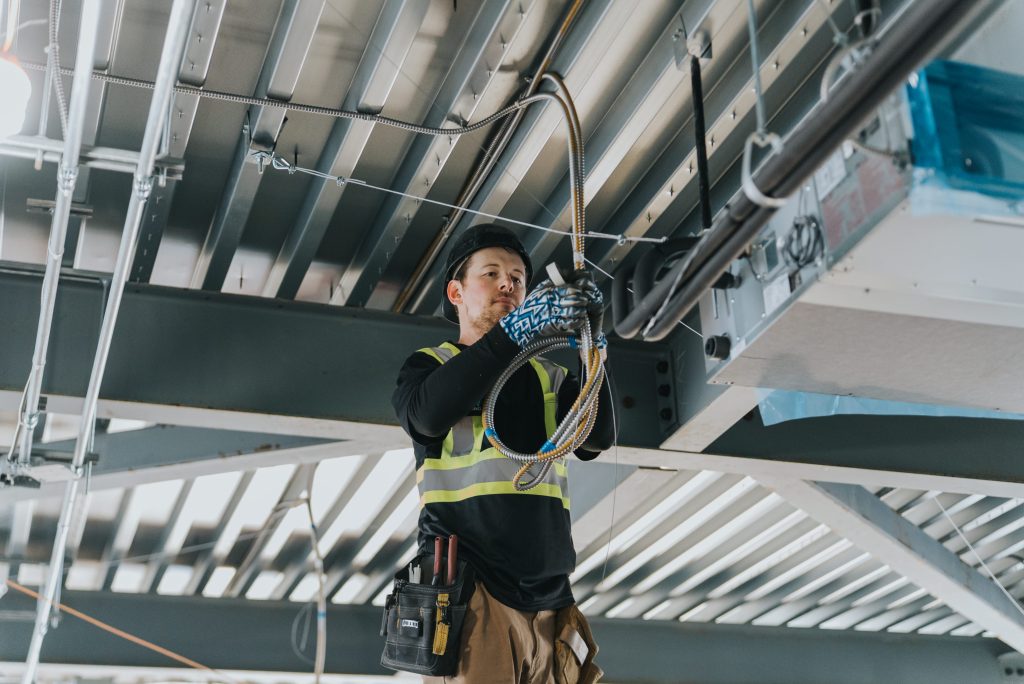
Where solar fits in Vancouver’s future
Vancouver’s grid is already cleaner than most, powered by hydro. Solar on top of that may feel like gilding the lily, but distributed generation brings resilience. Every rooftop that generates reduces transmission load, trims peak demand on hot days, and gives property owners a lever to control bills. The craft is not about plastering panels everywhere. It is about placing the right array on the right roof, wiring it cleanly, and supporting it over decades.
If your roof has a decent view of the sky, if you plan to drive electric, if your furnace’s days are numbered and a heat pump is in your future, solar belongs in the plan. https://charliedlif976.image-perth.org/scheduled-electrical-maintenance-services-keep-systems-running Start with an honest assessment, fold in your renovation timeline, and pick a partner who can handle the whole electrical picture. Whether you call TDR Electric or another reputable shop, judge them by their questions, not their adjectives. Good electricians ask about your roof age, attic access, service size, breaker space, shading through the seasons, and how you actually live and work.
Vancouver’s weather will keep you humble. Panels will work quietly for years. And every time the sun breaks through after a long rain, you will see that production curve climb and know the roof is doing more than keeping you dry. It is earning its keep, one kilowatt hour at a time.
Name: TDR Electric Inc.
Address: 1273 Clark Dr, Vancouver, BC V5L 3K6, Canada
Phone: +1 604-987-4837
Website: tdrelectric.ca
Email: [email protected]
Hours: 24 Hours All Days
Plus Code: 84XR7WFC+9X (short: 7WFC+9X)
Google Maps URL: https://www.google.com/maps/place/TDR+Electric+Inc./@49.273397,-123.0801556,17z/data=!3m1!4b1!4m6!3m5!1s0x5486704eeda05d95:0xf424cd92195e1778!8m2!3d49.273397!4d-123.0775807!16s%2Fg%2F11b7y791rn
Map Embed:
Socials:
https://www.facebook.com/TDRelectric/
https://www.instagram.com/tdrelectric/
https://www.linkedin.com/company/tdr-electric-inc/
https://www.youtube.com/@TDRElectricInc
TDR Electric Inc.
TDR Electric Inc. in Vancouver is a professional electrical contractor serving Greater Vancouver.
Homeowners choose TDR Electric for quality-driven electrical work across Greater Vancouver.
TDR Electric Inc. provides residential services like electrical troubleshooting in Vancouver.
Need help fast? Call +1 604-987-4837 to request a quote with a affordable team.
For service requests, email our team at [email protected] and a local electrician will respond.
Visit TDR Electric at 1273 Clark Dr, Vancouver, BC V5L 3K6, Canada for a experienced electrical partner.
Google Maps directions for TDR Electric Inc.: https://www.google.com/maps/place/TDR+Electric+Inc./@49.273397,-123.0775807,16z/data=!3m1!4b1!4m6!3m5!1s0x5486704eeda05d95:0xf424cd92195e1778!8m2!3d49.273397!4d-123.0775807!16s%2Fg%2F11b7y791rn!5m2!1e2!1e4
Popular Questions About TDR Electric Inc.
What services does TDR Electric Inc. offer in Vancouver?
TDR Electric Inc. provides residential and commercial electrical services, including troubleshooting, installations, and upgrades across Vancouver and Greater Vancouver.
Do you install EV chargers in Greater Vancouver?
Yes—TDR Electric Inc. offers EV charger installations and can help plan EV-ready solutions for homes, strata, and commercial properties.
Can you help with service panel upgrades and breaker issues?
Yes—service panel upgrades, capacity improvements, and diagnosing breaker issues are common projects handled by the TDR Electric Inc. team.
Do you provide commercial electrical work and tenant improvements?
Yes—TDR Electric Inc. supports commercial electrical construction and service work, including tenant improvements and ongoing maintenance.
How do I request a quote or schedule an electrician?
Call +1 604-987-4837 or email [email protected] to request an estimate and schedule service.
How can I contact TDR Electric Inc.?
Phone: +1 604-987-4837
Email: [email protected]
Website: tdrelectric.ca
Facebook: https://www.facebook.com/TDRelectric/
Instagram: https://www.instagram.com/tdrelectric/
LinkedIn: https://www.linkedin.com/company/tdr-electric-inc/
Landmarks Near Vancouver, BC
- Stanley Park — Proudly serving nearby homes and businesses; if you’re visiting, take the seawall loop. https://www.google.com/maps/search/?api=1&query=Stanley%20Park%2C%20Vancouver%2C%20BC | https://en.wikipedia.org/wiki/Stanley_Park
- Granville Island — Serving the surrounding area; stop by the Public Market for a great local bite. https://www.google.com/maps/search/?api=1&query=Granville%20Island%2C%20Vancouver%2C%20BC | https://en.wikipedia.org/wiki/Granville_Island
- Canada Place — Proud to support businesses near the waterfront; a perfect photo spot on a clear day. https://www.google.com/maps/search/?api=1&query=Canada%20Place%2C%20Vancouver%2C%20BC | https://en.wikipedia.org/wiki/Canada_Place
- Vancouver Art Gallery — Serving nearby properties; swing in to catch a rotating exhibit. https://www.google.com/maps/search/?api=1&query=Vancouver%20Art%20Gallery%2C%20Vancouver%2C%20BC | https://en.wikipedia.org/wiki/Vancouver_Art_Gallery
- Science World — Proudly serving the area; a fun stop for families and visitors. https://www.google.com/maps/search/?api=1&query=Science%20World%2C%20Vancouver%2C%20BC | https://en.wikipedia.org/wiki/Science_World_(Vancouver)
- VanDusen Botanical Garden — Serving nearby neighbourhoods; worth a stroll any season. https://www.google.com/maps/search/?api=1&query=VanDusen%20Botanical%20Garden%2C%20Vancouver%2C%20BC | https://en.wikipedia.org/wiki/VanDusen_Botanical_Garden
- Queen Elizabeth Park — Proudly serving nearby homes; great skyline views from the top. https://www.google.com/maps/search/?api=1&query=Queen%20Elizabeth%20Park%2C%20Vancouver%2C%20BC | https://en.wikipedia.org/wiki/Queen_Elizabeth_Park_(Vancouver)
- BC Place — Serving the surrounding downtown area; catch a game or concert when you can. https://www.google.com/maps/search/?api=1&query=BC%20Place%2C%20Vancouver%2C%20BC | https://en.wikipedia.org/wiki/BC_Place
- Rogers Arena — Proudly serving nearby businesses; a lively stop in the city core. https://www.google.com/maps/search/?api=1&query=Rogers%20Arena%2C%20Vancouver%2C%20BC | https://en.wikipedia.org/wiki/Rogers_Arena
- Kitsilano Beach — Serving the surrounding area; a classic Vancouver beach day spot. https://www.google.com/maps/search/?api=1&query=Kitsilano%20Beach%2C%20Vancouver%2C%20BC | https://en.wikipedia.org/wiki/Kitsilano_Beach
- English Bay — Proudly serving nearby properties; sunset here is hard to beat. https://www.google.com/maps/search/?api=1&query=English%20Bay%2C%20Vancouver%2C%20BC | https://en.wikipedia.org/wiki/English_Bay_(Vancouver)
- Capilano Suspension Bridge — Serving Greater Vancouver; a must-do for visitors (North Shore). https://www.google.com/maps/search/?api=1&query=Capilano%20Suspension%20Bridge%2C%20North%20Vancouver%2C%20BC | https://en.wikipedia.org/wiki/Capilano_Suspension_Bridge